Posted: 4/6/2026
SNR Alumni: Networking pays off for Eric Marrow in environmental science
By Ronica Stromberg
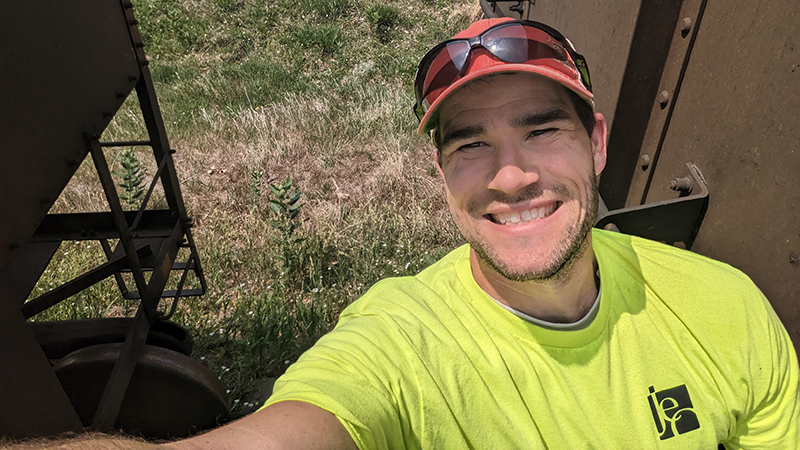
Eric Marrow, a 2015 alumnus of the University of Nebraska–Lincoln, has seen the power of networking in his career—even in unlikely places.
Now an environmental scientist with JEO, Marrow propelled his science career forward twice by networking at a fitness club, which led to jobs in his field and further opportunities to network. He remains a strong advocate of networking today.
Marrow worked at the local gym in high school and college, as a lifeguard and in courtesy services, before landing his first job related to his major, fisheries and wildlife. He had been talking to a member at the club, and she told him about an internship with the Nebraska Department of Roads, now called the Nebraska Department of Transportation. The next week, she gave him an application and a contact name. Marrow applied and landed the internship his senior year.
He worked with the environmental sciences team on large state projects, getting familiar with environmental consulting through work with private consulting firms. The mix of office work and fieldwork piqued his interest in environmental consulting work, but he had no job lined up when he graduated. He started sending emails and resumes to prospective employers, asking about openings.
"It only took me about six months to find a job, but at the time when you're looking for something, it feels like forever," he said.
Near the end of the six months, his manager at the gym said her husband knew that Mainelli Wagner & Associates, a consulting engineering firm, had been seeking to fill a position. Her husband wasn't interested in applying but was willing to suggest Marrow as someone with an environmental background.
"He name-dropped me, and I think I had an interview the next week, and then about two days after that, I had a job at that company," Marrow said.
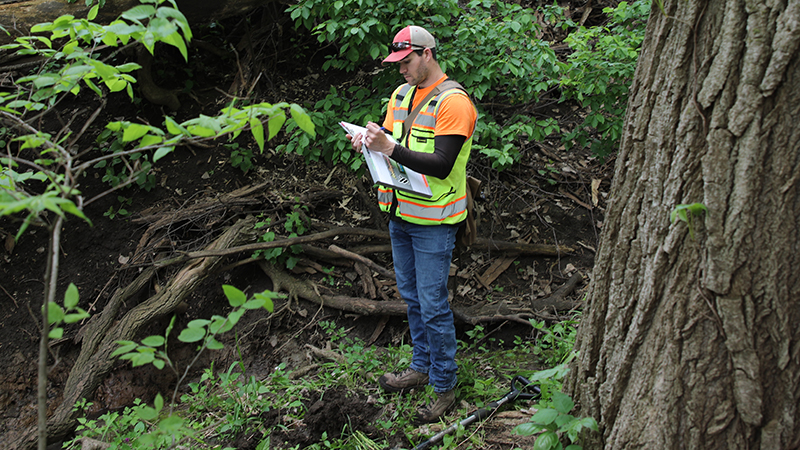
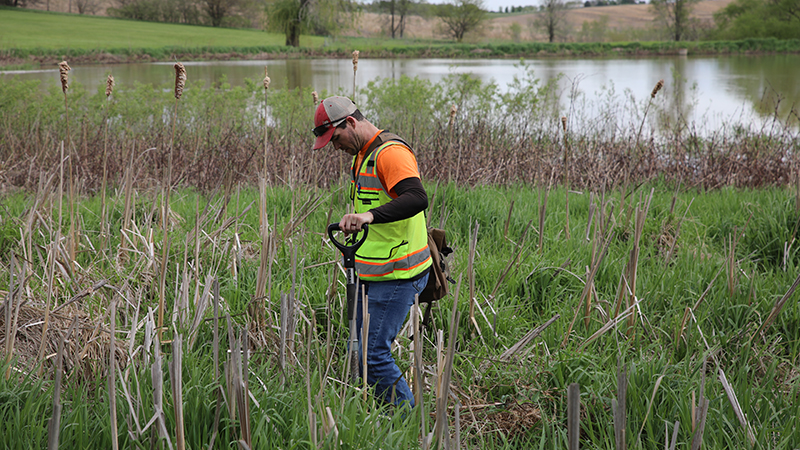
Hired for environmental fieldwork, Marrow served as a consultant to clients like the Nebraska Department of Transportation, federal agencies like the Federal Emergency Management Agency and communities with construction projects. He traveled to areas where projects were planned to take place and researched whether the projects might affect threatened or endangered species or water resources. He worked on wetland delineations, stormwater pollution prevention plans, animal surveys and reports to help clients get permitted, comply with laws and regulations and protect the environment and its inhabitants as much as possible.
After seven years at Mainelli Wagner & Associates, he took work at JEO Consulting Group as an environmental scientist and has been there four years.
At JEO, he has continued the environmental consulting work and said a good chunk of his work is with transportation projects. When a road or bridge is being put in, repaired or replaced, Marrow and a team will work with the U.S. Army Corps of Engineers to ensure the project meets requirements of the Clean Water Act, Section 404. This regulation relates to the discharge of dredged or fill material into U.S. waters, including wetlands.
Marrow’s team may do a wetland delineation or collect data for the Nebraska Stream Condition Assessment Procedure, identifying the condition that a stream is in and how a project will work to improve its functionality. Another part of Marrow's work is with the National Environmental Policy Act for federally funded or permitted projects. He said that once impacts are identified and fall within acceptable thresholds, the project can be permitted and built.
"It's very rare that a project is completely stopped because of what we'll find," he said. "We work to make sure that the projects can continue. We just make sure we're doing it in the correct way and trying to minimize the impacts as much as possible."
He said he had never expected, as a college student, to do such environmental consulting because he hadn’t heard much of it. Still, when he looks back, he can see how the School of Natural Resources prepared him.
"I think the courses I took still prepared me in a very good way for this, in terms of knowing how to research things and wanting to keep learning about things," he said. "While I'm on the job, I'm learning new stuff every day."
He also earned a focus in geospatial information systems at Nebraska and said he uses Esri ArcGIS Pro a lot on the job. Like, he might create a map of an area showing where dens of swift foxes, an endangered species in Nebraska, are located.
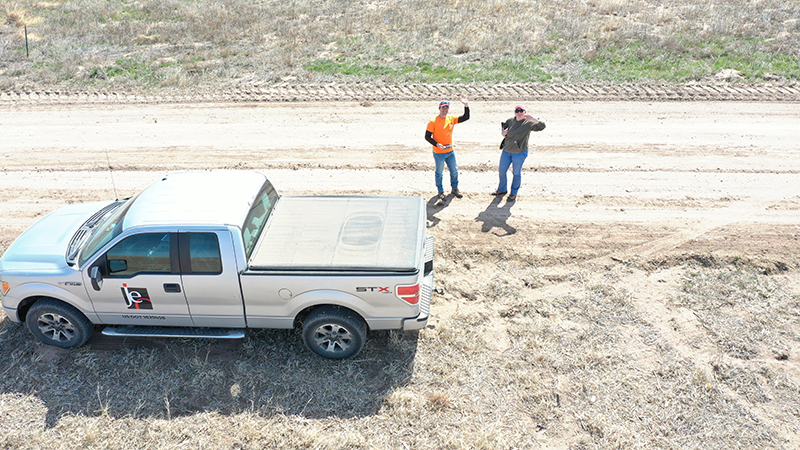
He may use drones to look at and photograph hard-to-reach areas, set up remote cameras to verify a den or site is still in use and use an iPad and a Trimble GPS handheld device to get and record precise locations in the field.
He encouraged students considering the field to be willing to try new things, keep up on their studies and be ready to learn on the job. JEO offers internships, and Marrow advised students take internships when they can. Even if students are unable to take part in clubs or activities because they are working through college, as he was, he advised continuing to establish a good work record, working relationships and references. He also recommended networking, recognizing the power it has held for him.
"It's a very small world," he said. "Knowing people and just having those good relationships with them pays off a lot when it comes to this type of work."
At JEO, his current supervisor worked at the Department of Roads when he interned there. Some of his coworkers were at different agencies while he was in his last job and he met and corresponded with them there.
"Networking has played a big, big role in my career overall," Marrow said. "It's been quite the right-place, right-time story of just knowing people that can help you move on in your career."