Posted: 6/17/2026
Britton soaring with duck research in Nebraska
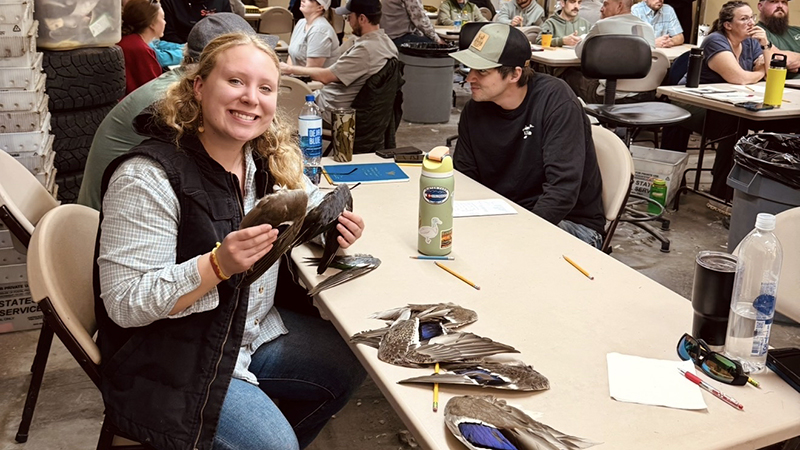
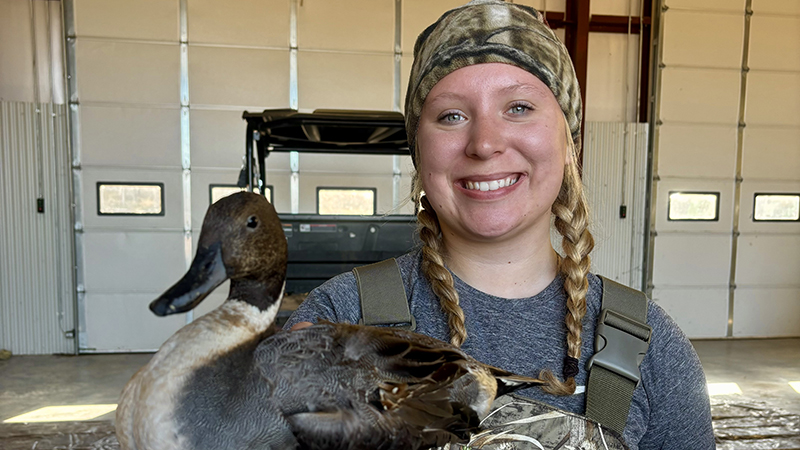
When Ava Britton left Connecticut to move to Nebraska to conduct duck research there and in South Dakota, her family and friends questioned her, "Why Nebraska?" It was a question she was asking herself, a fan of large, charismatic animals like deer and bears—not ducks.
Still, when University of Nebraska–Lincoln professors Mark Vrtiska and Chris Chizinski offered her support for master's research on how new regulations might affect duck hunting, she took it.
Britton soon found answers in the duck research—and for the friends who questioned her state choices. She invited them to Lincoln. They came and saw for themselves why Nebraska.
"They were really surprised by how nice Lincoln is and how nice Nebraska is in general," she said. "But yeah, I really love it out here, and I would definitely be happy staying for a bit longer."
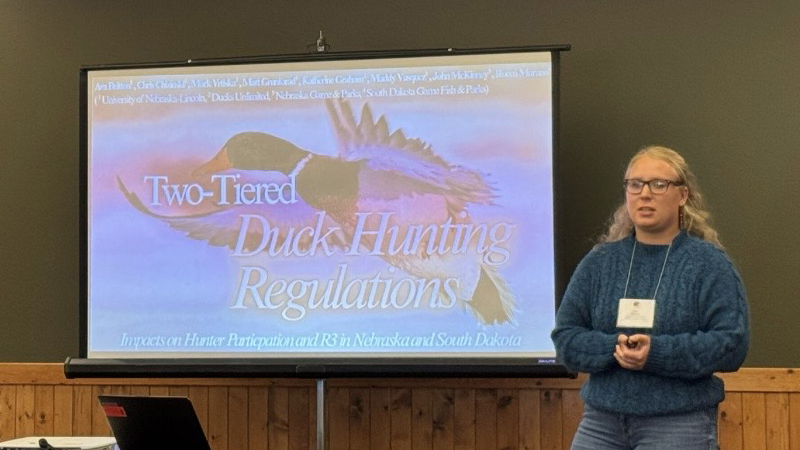
Since fall 2024, she has been studying two-tier hunting regulations piloted in Nebraska and South Dakota in March 2021. Under the original duck hunting regulations, Tier I, hunters can harvest six ducks a day but the ducks have to be of a specified species or sex. Under Tier II regulations, hunters can harvest three ducks a day without species or sex restrictions.
Britton and Maddy Vasquez, another master's student, have found through hunter surveys that harvest patterns remain about the same under Tier II as under Tier I.
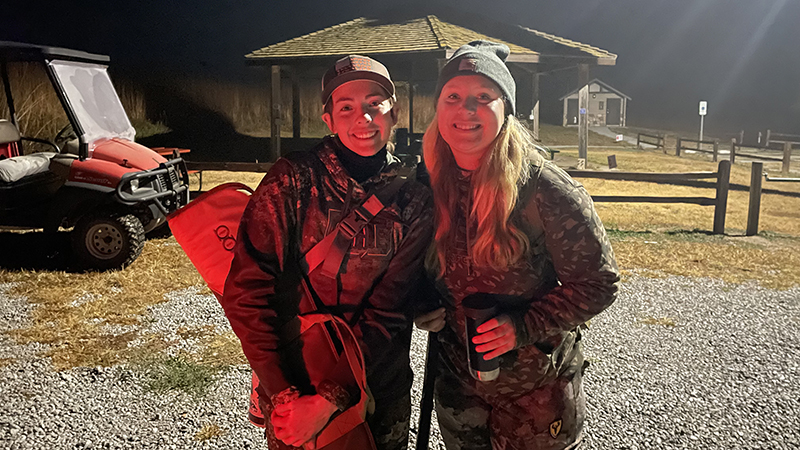
"That was one of the big concerns at the beginning of implementing these regulations was, are people going to take advantage of the easier regulations to shoot more of a certain species of duck and is that going to affect the populations in a way that we don't want it to? And we really haven't been seeing that," Britton said.
She has presented her findings at waterfowl conferences and meetings of The Wildlife Society and of the Central Flyway Council. Often, she has been the only woman in a room full of men in their 50s, she said.
"It can be really intimidating, especially when I first started out as, like, 'Oh, I should not have a voice here. They don't want to hear from a 23-year-old master's student.' But I've made so many friendships and connections through all of those moments, and it's really changed my perspective,” she said. “I think women are starting to really get a foot in waterfowl, which is great to see, and I really want to continue in waterfowl research."
She recently received acknowledgment of her research from the Central Flyway Council and the Nebraska Chapter of The Wildlife Society. The organizations presented her with the Joe Gabig Memorial Award at the School of Natural Resources spring banquet on April 11, 2026. The $250 annual award goes to one Nebraska college student performing high-quality research related to migratory game bird or wetland conservation and management.
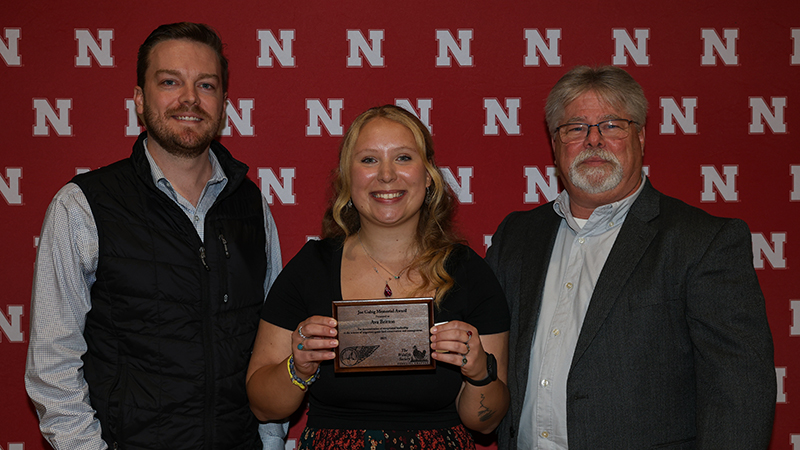
Vrtiska knew Gabig, who had worked as a waterfowl program manager at the Nebraska Game and Parks Commission, and said Britton has the same level of passion about wildlife conservation as Gabig did.
"Ava has this enthusiasm that’s contagious, and her demeanor and ability to work with a variety of people has been greatly beneficial to not only her thesis project but the overall evaluation on two-tier duck hunting regulations," Vrtiska said. "She works extremely hard and she is a dedicated individual."
Britton said she was shocked and honored to receive the award in Gabig's memory. She noted she has grown much at Nebraska, overcoming a fear of public speaking and dealing with imposter syndrome, which she described as the feeling a person has of not being smart enough to be in the room with a certain group of people.
"It happened to me especially in the beginning, because I was like, 'This is so new, and I don't know as much as all of these people know.' But I think now that I'm at the end, I'm like, 'That's the point is being in a group of people where you aren't the one that knows everything, and that's OK. It's OK to not know so many things along the way, because there are so many people to help you and guide you.' So, it's just been a really cool experience to come out the other side," she said.
Before graduating, she plans to add to her research experience by getting hands-on work with ducks from October 2026 to February 2027. She will work with Ethan Dittmer, a Nebraska doctoral student, installing GPS monitors on ducks in a project in Kansas.
In May 2027, she plans to graduate with a degree in natural resource sciences and a specialization in applied ecology. She is working with Vrtiska and Chizinski to seek funding for doctoral research beyond that.
With the Tier II duck hunting regulations meeting with success, she said she expects other states to try them out and she would like to continue research on that.
"I never expected to pivot into birds or waterfowl, but I think it's a really neat area," she said. "Now that I'm in it, I'm like, 'This is where I want to be.'"