Posted: 5/21/2026
SNR Alumni: Jeff Obrecht receives 2026 Distinguished Service Alumni Award in SNR
By Ronica Stromberg
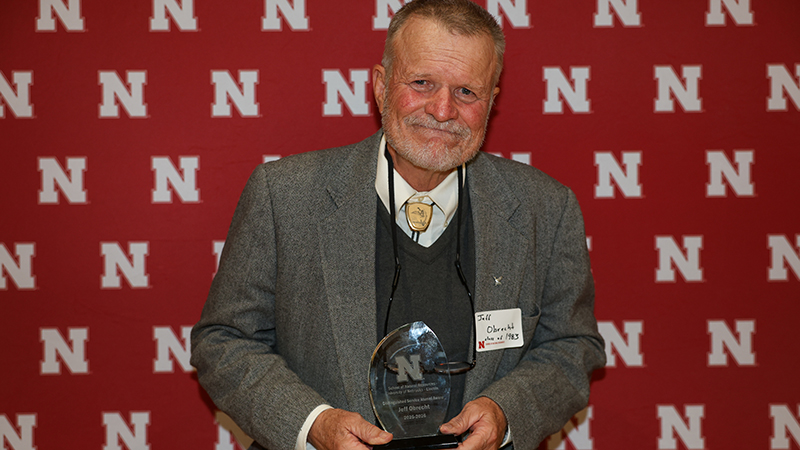
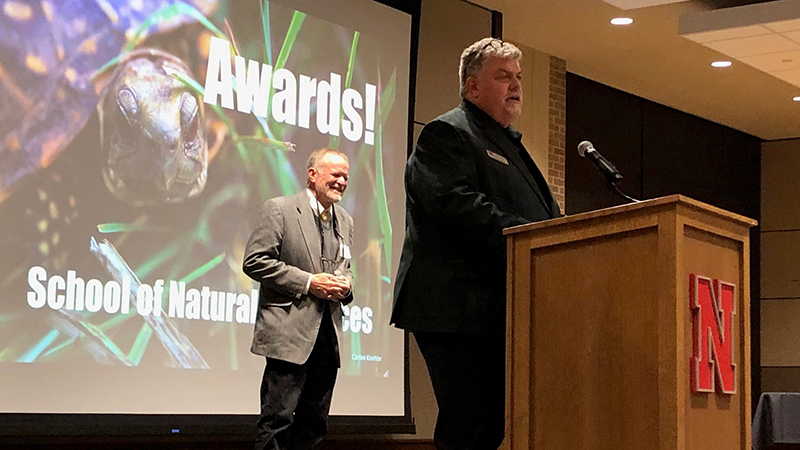
Jeff Obrecht, a 1983 Cornhusker alumnus with a wildlife management degree, received the Distinguished Service Alumni Award from the School of Natural Resources on April 11. Obrecht worked in public affairs for the Wyoming Game and Fish Department for 32 years before retiring in 2018.
He had a minor in agricultural journalism from Nebraska and used his education to perform a broad spectrum of tasks as a public information officer. He hosted two weekly radio shows and a call-in show, contributed articles to Wyoming Wildlife magazine and served as its interim editor from 2015-2016, taught children in school programs about wildlife, represented the department at outdoor shows and expos, responded to requests from the media and public, instructed workshops on shotgun shooting, ran check stations in big-game hunting seasons and assisted a Nebraska professor, Ron Case, in bringing students to Wyoming to learn about wildlife management across the state.
"His forte was being a loyal alum who served as a liaison with other graduates of the University of Nebraska–Lincoln who worked for Wyoming Game and Fish," Case, now an emeritus professor, wrote in his nomination of Obrecht for the alumni award. “They formed a close-knit cadre of ambassadors for the university. As a group, they excelled with the agency."
Tom Christiansen, one of the other Nebraska alumni who was part of the Wyoming wildlife cadre Case mentioned, also nominated Obrecht for the award.
"His most meaningful outreach was largely conducted without fanfare, behind the scenes, and was more intimate," Christiansen wrote in his nomination of Obrecht. "He spoke patiently and genuinely on the phone with uncounted, but literally thousands, of outdoorsmen and women seeking advice and information about where and how to hunt and fish. He excelled at one-on-one, hands-on training of youth in safe gun handling and shotgun skills. The talents Jeff developed were forged at the University of Nebraska–Lincoln, largely through mentorship from the legend himself, Professor Howard Wiegers."
Obrecht had been advised by Wiegers, the founder of what is now the School of Natural Resources at Nebraska.
"He wasn't only my advisor as a student, he was advisor through most of my life and darn near up to his 105th year, his last year in life," Obrecht said.
Obrecht, a Lincoln native, had come to the university in 1973 to take wildlife classes and become a waterfowl biologist. Entering college as an avid hunter and angler, he also played on the baseball team his freshman year. He married in college, started a family and took classes part-time while working full-time in the evenings at American Stores, a now-defunct packing plant. He remained a nontraditional student until graduating in December 1983.
The 1980s and 1990s had tight job markets, with baby boomers entering the workforce from the late 1950s and on. Obrecht had foreseen in college that he would need something extra to make himself stand out when applying in the crowded wildlife field.
"Only about one in three graduates were actually ending up in the wildlife field, and it was almost a prerequisite if you were going to be a biologist out here—well, any state as far as that goes—you're going to need a master's degree," he said. “Having this family—a couple little boys and everything—I did not have the time or the resources to pursue a master's. And so, I had the revelation, 'I'm going to have to market myself with a bachelor's degree, but I'm going to have to somehow make myself special within that.'"
Obrecht had taken journalism classes in high school and liked to write. He added to his wildlife skillset in college by taking journalism classes, including broadcasting. He wrote hunting and fishing stories for The Daily Nebraskan and ran the university’s radio station a couple of hours a week. He also took part in the Wildlife Club and, at Wieger's advice, joined Toastmasters to build public speaking skills.
His diversification strategy paid off after college. He landed a job in the public affairs section of the state office of the Soil Conservation Service, now called the Natural Resources Conservation Service.
The position was funded by soft money, and when that ran out, a friend from college, Christiansen, recommended him for a position with the Wyoming Game and Fish Department. Other college friends from Nebraska had also moved to Wyoming, and Obrecht gladly took the position and reconnected with them. He remained at the department until retiring.
Proudest achievements there he cited were helping Case bring students to Wyoming, taking part in a PBS documentary on the impacts of a 1949 blizzard on Wyoming wildlife, becoming a certified shotgun instructor and teaching others to use nontoxic shot on waterfowl, and writing magazine articles about the history of the meadowlark becoming the state bird and about a Wyoming senator who fished.
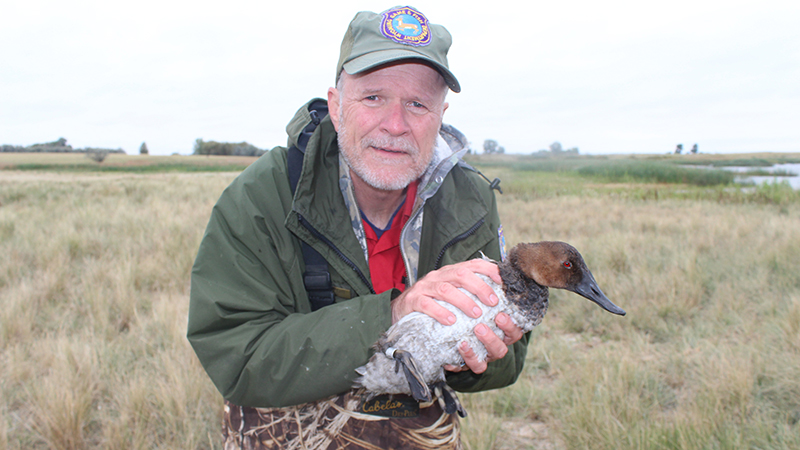
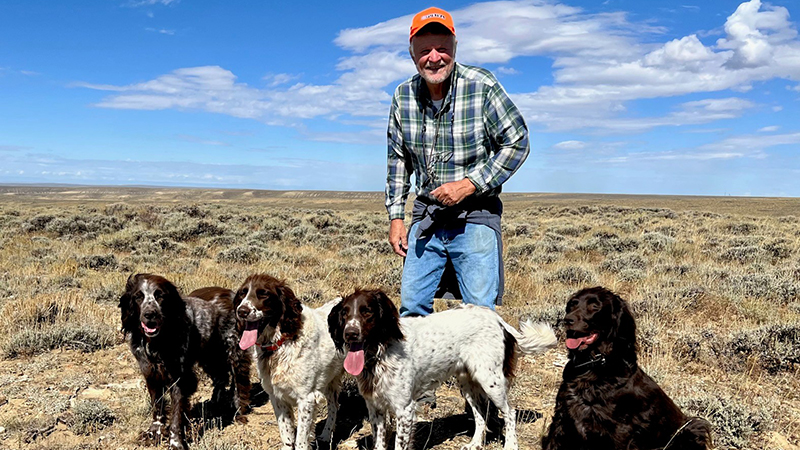
Since retiring, he has trapped and banded mourning doves as part of a federal program to gather data on them, such as migration patterns and wintering locations. He also maintains nesting structures for geese and ducks in a city park and serves as president of the German Longhaired Pointer Club of North America. He uses his bird dog to hunt birds and, in Texas, wounded wild hogs.
For students eyeing the wildlife field, he advised having a broad perspective and taking part in clubs that interest them outside their discipline as well as in it. He also advised students to develop writing skills.
"A lot of folks come out of science with a writing phobia, particularly to the public audiences, but make yourself comfortable being able to turn words into sentences and, also, not just on paper but in front of people, too, verbally," he said.
He strove to further his people skills in college by taking a human relations class, as required by Wiegers of all wildlife students. He recommended students take such a class and, also, a sociology class.
"I didn't have any sociology, and it really would have helped me because I was just kind of thrown right into the lake here," he said. "You know, 'Hey, start swimming and dealing with the public out here.' Some sociology would have been a good background to help me understand how people are thinking, particularly the rural farming and ranching community that I had to deal with a fair amount."
He advised students to continue learning and said some of the best learning comes through colleagues and friends. He thanked his friends and colleagues for help along the way and the alumni award nomination.
"I am genuinely honored, flattered, humbled by it, but I got to say that there are dozens of UNL wildlife alumni with probably more impressive careers than I had," he said. "What really was in my camp here is the distinguished nominators that I had for this award."