Posted: 3/2/2026
SNR Alumni: Scott Glup shares takeaways from long career
By Ronica Stromberg
Cornhusker Scott Glup worked in wildlife management almost 40 years and advises students eyeing the field to work hard, get along with others, be open to lesser positions to get a foot in the door and be willing to move.
He learned the truth of these lessons after earning his bachelor's and master's degrees in wildlife management from the University of Nebraska–Lincoln, his final degree in August 1987.
"When I came out of college, I envisioned crawling into bear dens and putting collars on bears or being out in the field doing research on ducks," he said. "What I ended up doing the last 25 years of my career is managing people and money, and I didn't leave the office, except to go to meetings. I wasn't out in the field doing that, but I still loved my career."
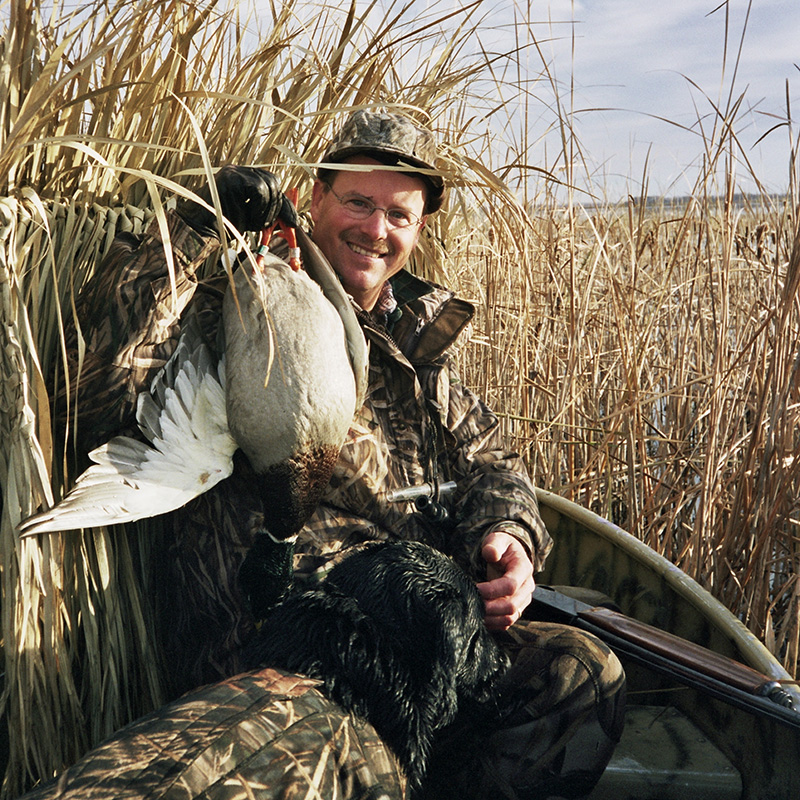
He had come to the university a shy kid from Tekamah, Nebraska, who liked to hunt, fish and trap and thought he wanted to be a game warden. It was the only profession he knew of working with wildlife. Howard Wiegers, a longtime professor and founder of the fisheries and wildlife program, introduced him to the many different careers in the fisheries and wildlife area and pushed him to get involved in college.
Glup took part in several student organizations and did his master's research at Valentine National Wildlife Refuge in Nebraska, working temporary jobs with the U.S. Fish and Wildlife Service. He served two summers as a biological technician for the federal agency and two years as a wildland firefighter. A work contact referred him after graduation to another temporary job, as a biological technician doing a duck survey at the Waubay National Wildlife Refuge in South Dakota.
He was still seeking a permanent position and, on the advice of contacts, applied for a clerk typist position. The position was a downgrade in pay, but it allowed him to receive training as a refuge manager at the Quivira National Wildlife Refuge in Kansas. As part of this work, he took federal law enforcement training in Glynco, Georgia.
After two years in Kansas, he moved to Devils Lake, North Dakota, and worked for a wetland management district, managing three counties along the Canadian border. He spent much of his three years there as a law enforcement officer managing public lands, dealing with easement violations and acquiring additional public lands and easements.
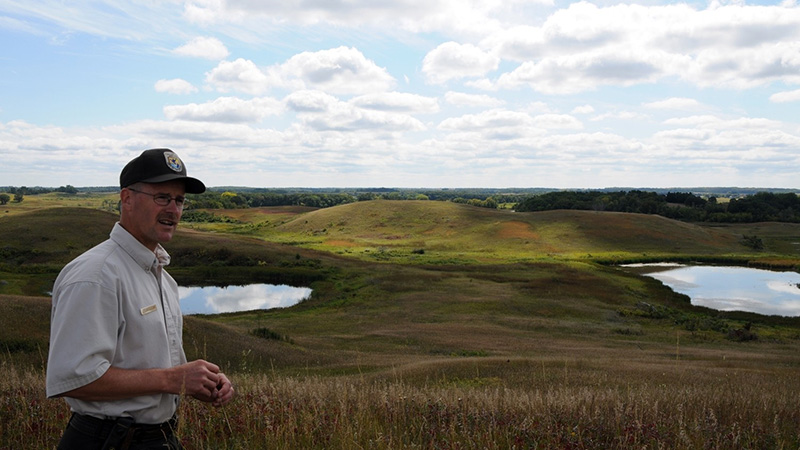
Next, he took a position at the Sand Lake National Wildlife Refuge in South Dakota, managing the eight-county wetland management district. He worked there 10 years before taking his final position, as a project leader for the Litchfield Wetland Management District in Minnesota. He worked at the district almost 23 years before retiring in November 2024.
Looking back, he said his college experience suited him better for wildlife work than his coursework did. While he stated a college degree is required for jobs in wildlife management and the University of Nebraska–Lincoln offers all coursework needed to be eligible for a federal position, he said he gained more in college by getting involved in the community, working with others and getting in front of them to speak.
Later, when in a hiring position himself, he looked less at college classwork and more at the people themselves.
"I focused way more on what kind of person they were," he said. "Is this a person that gets along with others? Is this a person with a really strong work ethic? Because what we do is not rocket science. If I hire a person that gets along with people and they want to work hard, it doesn't take long for us to train them up on what they need to know."
Although wildlife fields can be difficult to break into, he said he has seen more positions open up at lower levels, like state and county, than were available when he first sought work. He listed Soil and Water Conservation districts and Nebraska’s Natural Resources Districts as possibilities for new graduates. The positions might not be permanent but a place to start, he said.
"A lot of them would be the type of position you're still probably going to use to get your foot in the door, get your name out there, so you can apply for other positions and move up," he said.
He stressed being open to various positions in the field and being willing to move to take them.
"I think most wildlife people have this idea in their head where they go to school thinking they're going to be outside playing all the time, right?" Glup said. "Well, that's not reality. It is for a few. But be open. Just get your foot in the door, work hard, get along with people, make sure you have really good references."
By the end of his career, Glup had been involved in restoring and protecting more than 300,000 acres of waterfowl production habitat in three states. He came to think of his work acquiring and restoring land and hiring and mentoring people as the two most fulfilling parts of his career. He explained that the lands he helped acquire and restore are still there for people to enjoy, and the people he hired and mentored are still doing good work.
"A lot of the other stuff I did in my career was just something that would come and go, and it wouldn't last, but that lasted," he said.