Posted: 4/28/2026
Gruntorad wins staff award as hunting and fishing researcher
By Ronica Stromberg
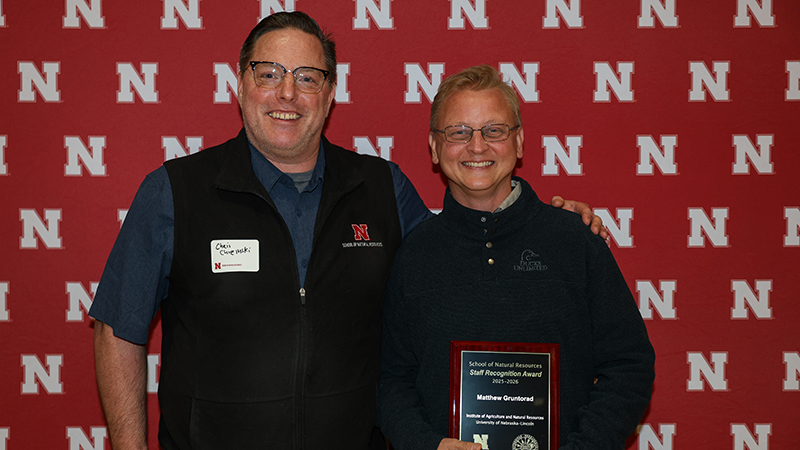
Matt Gruntorad, a human dimensions analyst in the School of Natural Resources, received the staff recognition award at the school’s annual banquet April 11, 2026. The award recognized his almost 11 years of work researching the human part of wildlife conservation.
It may seem a conundrum, but he explains that hunters and anglers are largely to thank for sustaining wildlife populations through their hunting and fishing activities.
"All the licenses and permits that get sold, that comes back to pay for habitat and management of healthy wildlife populations," Gruntorad said. "A lion's share of wildlife management rests on the shoulders of hunters and anglers buying permits."
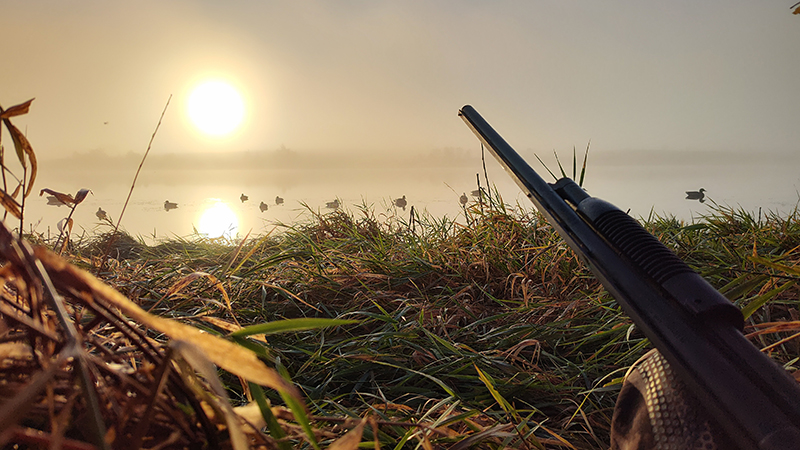
This is doubly the case for waterfowl, he said, because waterfowl hunters not only buy a hunting license but also buy a state waterfowl stamp and a federal waterfowl habitat stamp.
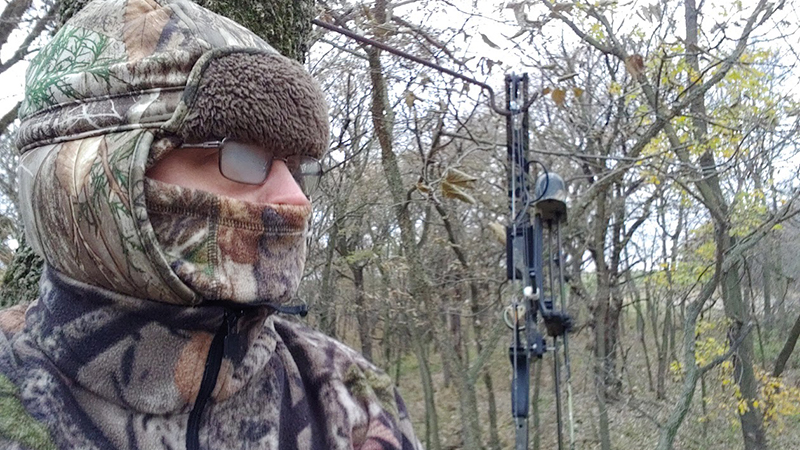
As a hunter and angler himself, Gruntorad said hunting and fishing are important beyond keeping healthy wildlife populations. They are enjoyable for a lot of people, improving their quality of life, he said.
Through past work and present projects with the Nebraska Game and Parks Commission, Gruntorad has striven to identify what holds people back from hunting and fishing and how they can be encouraged to take it up. Hunter and angler numbers are declining, and it’s important to reach the next generation, he said.
"Just being able to open that up for people so that they too have that great feeling that so many of us who do participate have, I think is really important to the work," he said.
It's the kind of work he takes home at night—much to the delight of his 10-year-old twins. He has involved both his son and daughter in fishing and said his daughter especially enjoys it. He has taken her fishing in Nebraska, West Virginia and South Dakota and took her turkey hunting this spring.
"She's begging me to go fishing all the time, and it's hard being a human dimensions analyst who promotes hunting and fishing as much as I can and then, because of whatever circumstance that day, having to occasionally say no to a child's request to go fishing,” he said.
He has taken her Girl Scouts troop out, teaching them to fish, and prior to his current job, he taught families to fish while working at the Nebraska Game and Parks Commission in a family fishing program.

At the university, he still works a lot with Game and Parks in his research on hunters and anglers. He has the Tier II Waterfowl Hunting project with them and South Dakota Game, Fish, and Parks. In this project, he surveys duck hunters about their satisfaction with hunting, especially as affected by regulations and daily bag limits.
"I'm finding that the conditions have to be much more specific in order to satisfy duck hunters in general than other types of activities, which makes studying duck hunters one of the most interesting aspects of my position," he said.
Other recent projects he has been working on with the Nebraska Game and Parks Commission include the Nebraska Hunter Satisfaction project and the Wildlife Damage project.
He also serves this year as the past president of the Nebraska Chapter of the Wildlife Society and, last year, served as the president.
Receiving a School of Natural Resources Staff Recognition Award this year took him by surprise and made him happy and proud, he said.
"My initial feelings were just I felt appreciated, and it was nice to have my work become more available and noticed by more people--not just my work but our work here in the human dimensions lab in general and the whole concept of human dimensions and the need for getting feedback from hunters in the wildlife management system," he said.
Christopher Chizinski, a professor in human dimensions of wildlife management and Gruntorad’s supervisor, credited Gruntorad's service, innovation, collaborative spirit and initiative as making him an outstanding candidate for the award.
"Matt is the connective tissue of our lab's most complex, multiyear projects," Chizinski said. "He supports my work, mentors graduate students and sustains strong relationships with the Nebraska Game and Parks Commission through prompt communication, careful organization and consistent follow-through—even under tight deadlines or shifting project demands. Our lab's success depends on him."
Gruntorad said the award would be the first on his CV but he sees its significance as broader than that.
"We're in a world where we, the humans, are really important to making decisions about how wildlife are managed," he said. "And so, I think this award helps bring some light on that whole reality of how the wildlife management system works now."