Posted: 3/24/2026
SNR Alumni: Andrew Zahn finds good fit with forestry work
By Ronica Stromberg
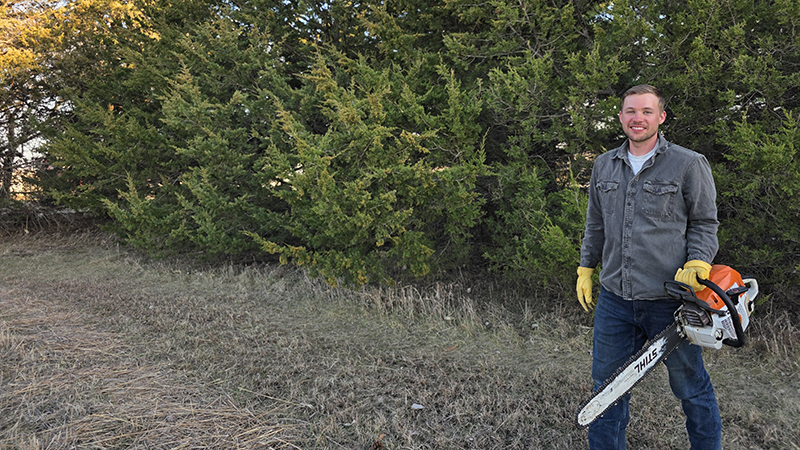
Andrew Zahn's work environment can be a place of tranquility and rejuvenation for him and others. The 2016 alum of the School of Natural Resources manages Horning State Farm, a tree farm just south of Plattsmouth, and the nearby Timmas ecological preserve.
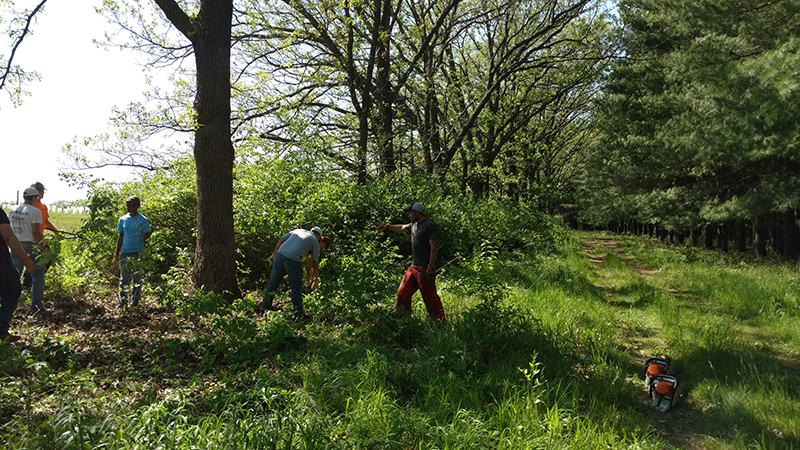
He spends much of his workday maintaining the farm's 240 acres, cutting down diseased and dead trees and clearing invasive species. He also runs tours of the forested properties and demonstration sites, leads work crews of university students in the summer and organizes the Forest Festival held every September.
Having grown up on a farm near Syracuse, he said the work suits him well because he loves the country life and working outside.
"I've always been, I guess, a country mouse," he said.
His career differs a bit from what he first envisioned as a fisheries and wildlife major at the University of Nebraska–Lincoln but restoring native forest stands and not being constrained to an office is what he enjoys, he said.
"It's been really rewarding to go through the restoration efforts and get to see the native species begin to flush back in once the invasive species problem has been removed in some areas," he said. "And I've always just enjoyed working with my hands and manual labor, so it scratches that itch."
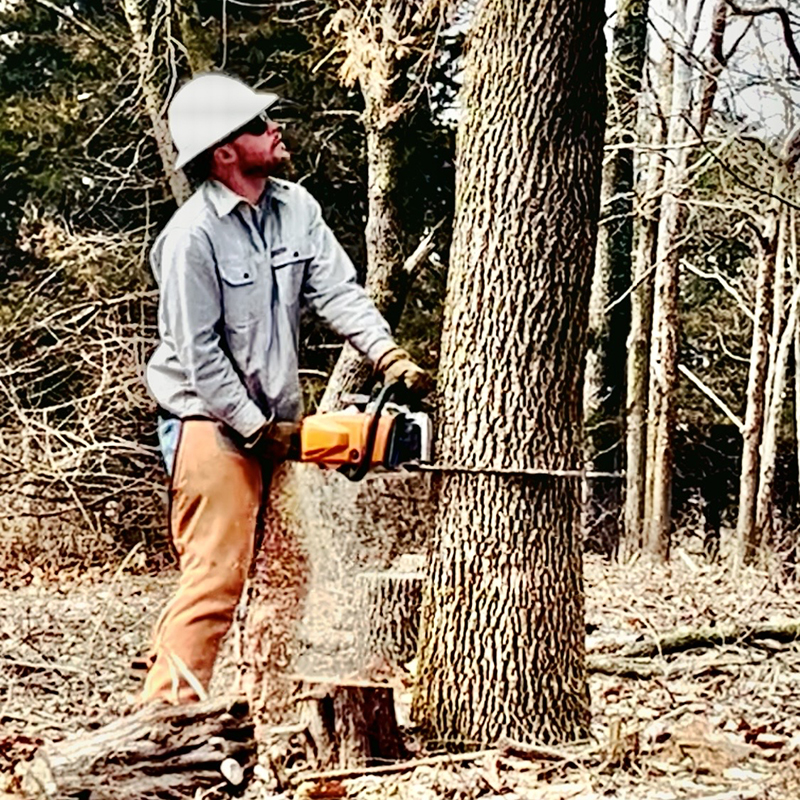
He has been tackling the Emerald Ash Borer, an insect which kills ash trees, and recently he and coworkers have cut down oak trees killed by another disease. Horning State Farm sold the wood as firewood to make the best use of it rather than just burning it in a pile.
The university owns the farm and uses it to educate students and the public on forestry and forestry practices. The whole property is intended as a demonstration ground, Zahn said. It demonstrates ways to control invasive species and keeps an arboretum showing how more than 50 tree species grow in eastern Nebraska.
The site has 30 acres devoted to agroforestry, with trees like pecan, hazelnut and chestnut planted as crops. Lord Ameyaw, a Nebraska forestry professor, leads agroforestry research there.
Zahn is the only staff person onsite, so tours are by appointment. He hosts a couple of university field trips each year and serves as the chair for Forest Festival in September. That family-focused, one-day celebration draws between 700 to 1,100 attendees each year. He and other workers guide tours by hayrack or foot. Partners set up booths where the public can take part in activities to learn about nature. Ann Powers, Nebraska lecturer, leads a tree climb with ropes.
"Kids just have a blast doing that," Zahn said. "There aren’t too many places where they could find that experience."
For students interested in exploring a forestry career like his, he suggested they start with professors Ameyaw and Powers as a resource for job leads and other opportunities. The Nebraska Forest Service also offers internship information on their website at https://nfs.unl.edu/internship/. Zahn worked at Horning State Farm every summer while a college student and said the work prepared him well for managing the property.
Once he became the property manager, he had further lessons in time management, prioritizing and deciding what needs to be maintained, improved or left for later. He said he also learned the importance of keeping records of every tree planted and work done to it, like grafting, to save guesswork later. He described the full slate of tasks, including so many hands-on ones, as a "reality check" but also job security.
"I don't know if forestry is artificial intelligence-proof, but until a robot learns how to swing a chainsaw, I think we're OK," he said.
Regarding chainsaws, Zahn said learning how to safely use them and other equipment and protective gear is important preparation for forestry work. Although he grew up on a farm, he said he had to overcome past habits of not using protective gear properly. He suggested students also prepare themselves by taking as many classes as they can in forestry and wildland fire and a few classes in plant biology. If they cannot find relevant classes, he suggested working related jobs.
Zahn gained forestry experience by working at Horning four summers, but he didn't immediately receive his management position upon graduating. For six months after graduating, he worked for a small company doing home remodeling and repairs. The work on furnaces and minor plumbing and electrical proved valuable later for property management, he said. He suggested work at a tree trimming or removal company might also be a useful segue into forestry work.
Now that he is on the other side of work crews, the one leading, he learns from students as well as teaching them. He described working with students as a "cool aspect" of his job, giving him different perspectives in solving problems encountered in forestry work.
"It's also inspiring to see college students, because they're in that time of life where they can really pursue any route and, generally, have the least amount of risk in doing so," he said. "And so, it's inspiring to just hear about their lives and what they want to do."