Posted: 11/10/2025
SNR plans two trips to Namibia in 2026, adding one for alumni and friends
By Ronica Stromberg
The School of Natural Resources plans to host its biennial study abroad to Namibia May 12 to June 4, 2026, but with a new addition this year. Professors Chris and Lindsey Chizinski will host the student trip while professors Larkin and Kelly Powell host a concurrent trip for 12 alumni and friends of the School of Natural Resources.
The alumni and friends trip has reached capacity, but students can still apply for the student trip until February 15, 2026, 11:59 p.m.
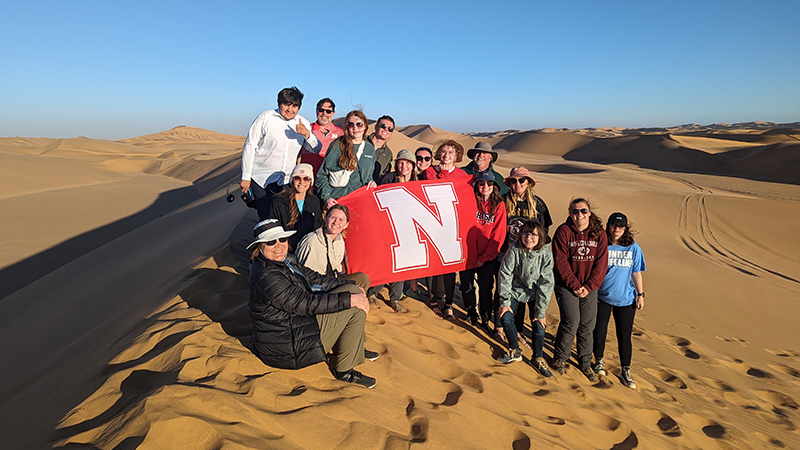
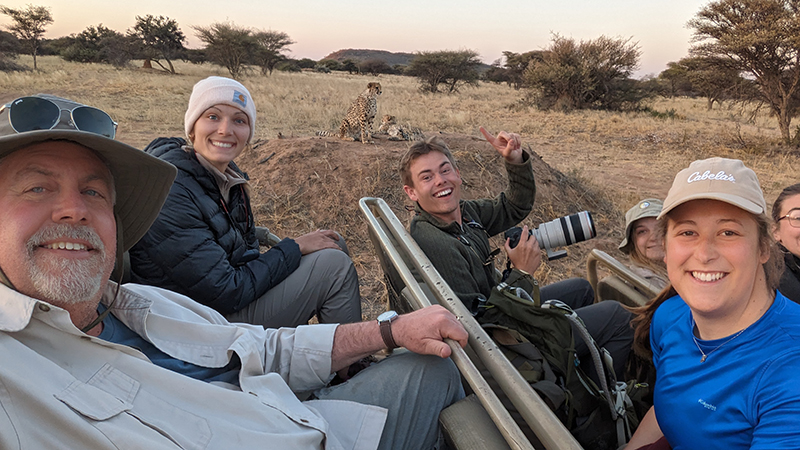
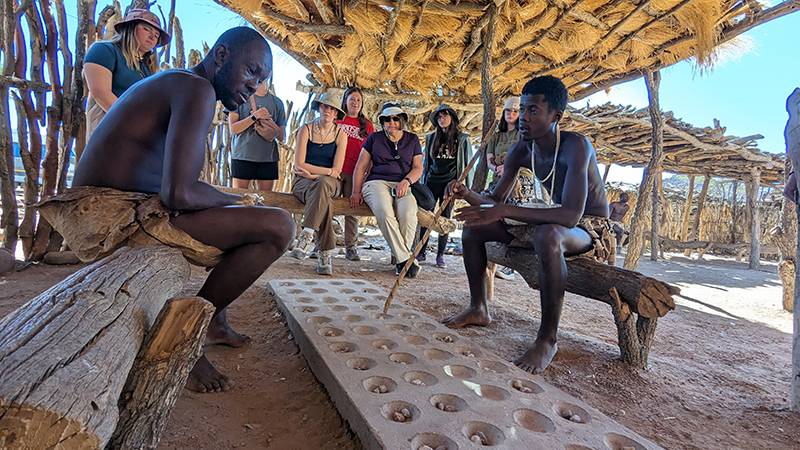
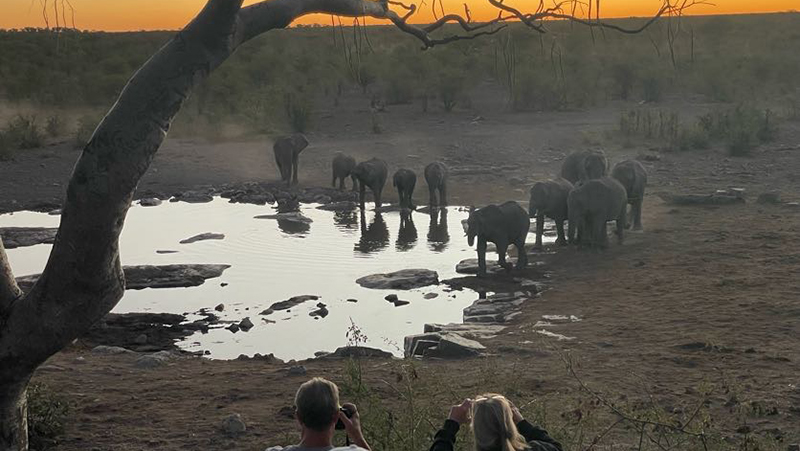
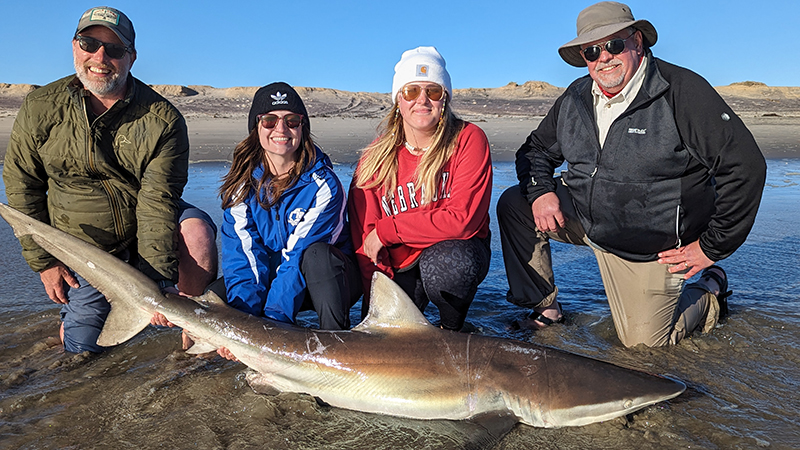
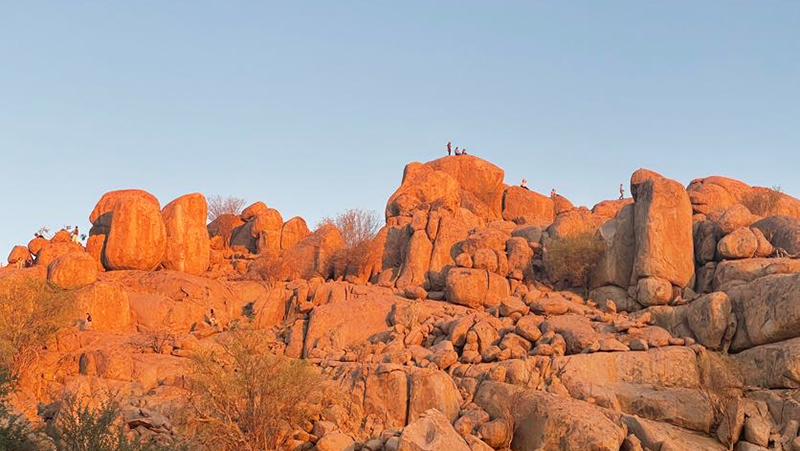
Students on the 1- to 3-credit study abroad can explore Etosha National Park, home of elephants, lions, rhinos and giraffes; watch cheetahs close up at the Cheetah Conservation Fund site; fish for sharks on the Atlantic Coast near Swakopmund; scale and surf some of the world's oldest dunes in the Namib Desert; sample local foods in Namibian cities and rural areas; camp in tents in the wild; and experience local cultures, like those of the Ovahimba and Damara people.
Christopher Chizinski, a professor of Human Dimensions of Wildlife Management, said the student trip will follow the same basic itinerary as the previous trip. It will start at the capital, Windhoek, in the center of Namibia and move south before circling back over the three weeks.
The alumni and friends trip will be shorter and meet up with the student trip for two to three days in the north, possibly at the Cheetah Conservation Fund site or the campsites near Etosha National Park.
Caden Connelly, a senior Fisheries and Wildlife major, took the Namibia trip in 2024 and, previously, had studied abroad in Botswana and South Africa. He said the Namibia trip differed from the other African trips he took because the group traveled and stayed around the country rather than staying in one locale. Connelly said the Namibia trip especially exposed him to other cultures, an important factor in understanding how different people view and carry out conservation.
"The Namibia trip was an experience to learn about something bigger than myself," he said. "It was the ability to connect with people all around the world and hear about their lifestyles and cultures in a way that I think was really open and vulnerable and allowed for a lot of meaningful connection. I was able to talk to people who worked in ecotourism, conservation and education and get a well-rounded sense of what natural resources looks like in a country like Namibia, which has an entirely different structure or model of wildlife conservation than we do here in North America."
Maddie Thompson, another Fisheries and Wildlife senior, agreed that the people she met in Africa stood out in her mind as of key importance in the trip.
"I feel like all of the people that we met from the [organizations] and whatnot along the way, like we all had the same ideologies," she said. "Like we should all be working together to conserve the land and the animals, and everything should be fair use and not exploited."
She had grown up loving the "Madagascar" movies and others about African wildlife and said she chose the Namibia study abroad for that reason. Still, seeing in person what she had seen only in movies had a powerful effect on her.
"I got to see one of the babies hold the mom's tail, just like they do in the movies," she said. "Oh my gosh, I was, like, crying my eyes out."
She also saw a black rhino, a critically endangered species, at a watering hole in the Etosha National Park. She had sat a short distance from the watering hole for hours, watching giraffes, zebras and elephants, when the black rhino strolled up.
"I'm like, ‘Wait. Is that real, or is that a robot? Because I thought there were only, like, a couple thousand left in this country," she said. "So, that was pretty incredible."
Chizinski recommended the study abroad for sophomores to seniors in areas like fisheries and wildlife, environmental science, sustainability, history, geography and human dimensions. The Namibia trip differs from other study abroads, he said, in its focus on ecology and how people live with, manage and conserve wildlife in fisheries.
"It's not just focusing on learning how to identify a white rhino versus a black rhino," he said. "We're really getting to meet the people. We're interacting with the people and learning how they manage and coexist with wildlife. But also, there's a strong component of sustainability and doing all of that in a pretty harsh climate."
Parts of the Namib Desert receive less than a centimeter of rain a year. Temperatures in winter, when the groups will be there, can drop from the 70oFs to 80oFs in the day to about 35oF at night. Because students sleep in tents at night during two-thirds of the trip, Thompson recommended students pack a parka and sweatpants. Camping in tents cuts the cost of the trip, which averages about $8,000 per student.
Both Thompson and Connelly encouraged students thinking about taking the trip to do so. Connelly said students should not be nervous or concerned about touring Namibia even if the country doesn't have a household name.
"The people are wonderful, the food, the overarching experience will be life-changing, and it's something you should be excited about, not nervous about," he said.
Larkin Powell, director of the School of Natural Resources, said the Namibia student trip is the school's longest running study abroad, started by Mark Pegg in 2005.
“The 2026 trip will put us beyond a span of 20 years, which is impressive for any experiential learning effort," he said.
-
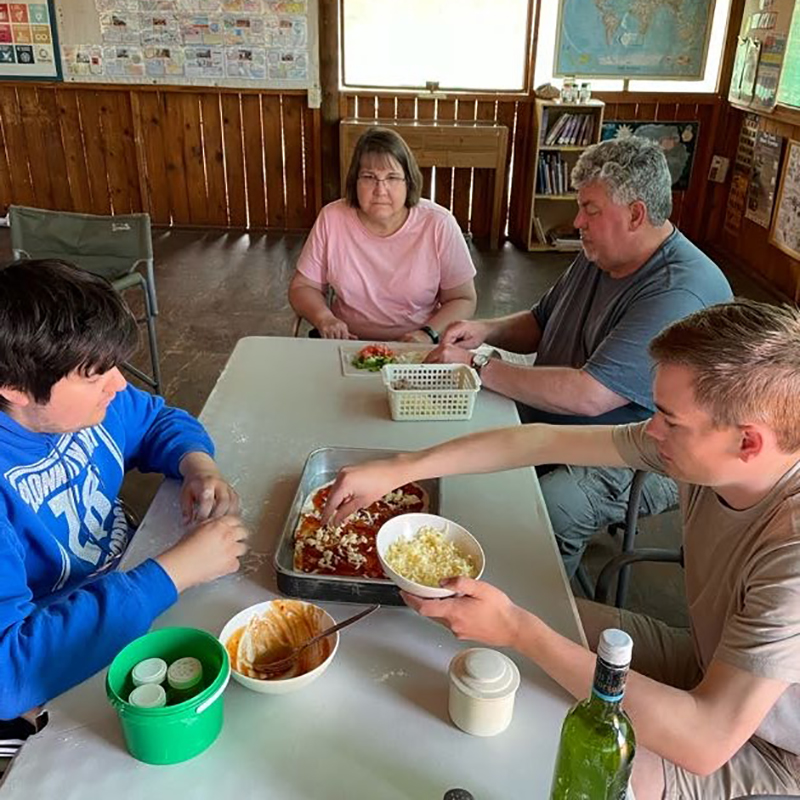
Juanito Seaborn, Kelly Powell, Larkin Powell and Caden Connelly make their own pizzas to be baked in solar-powered ovens at the Namib Desert Environmental Education Trust. -
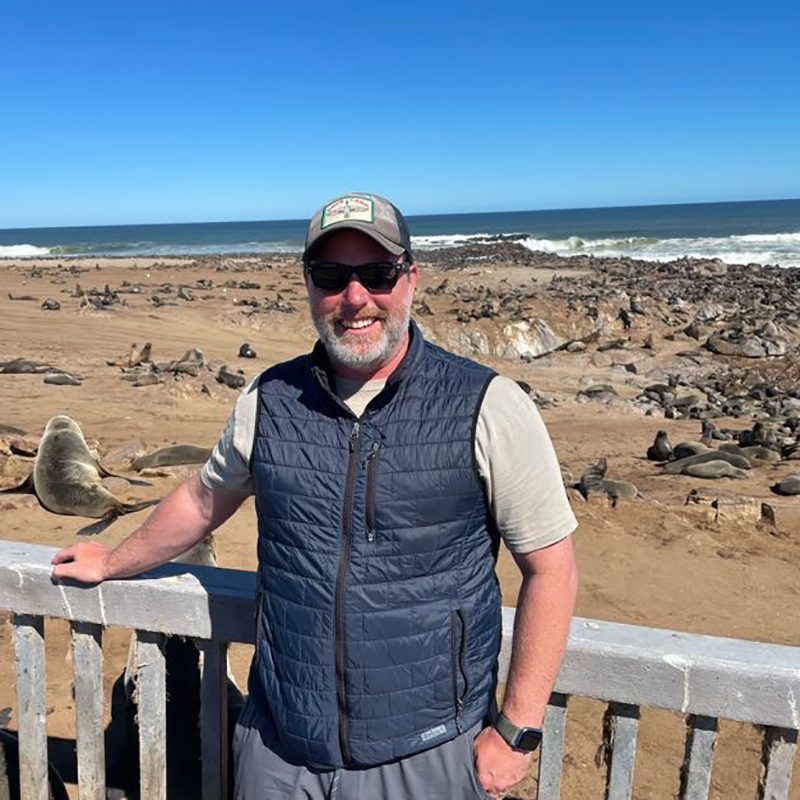
Christopher Chizinski, a professor of Human Dimensions of Wildlife Management, catches some sun with the Cape fur seals at the Cape Cross Seal Reserve in the 2024 Namibia study abroad. He will co-lead the 2026 Namibia study abroad with Lindsey Chizinski, ecology lecturer in the School of Natural Resources. -
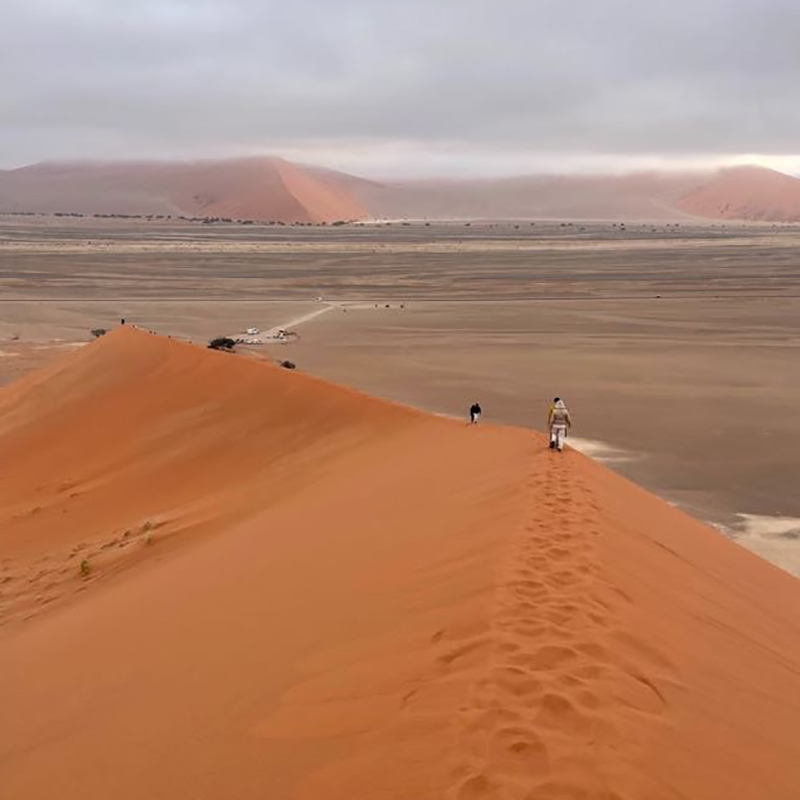
Students walk the ridge of Elim Dune in Sesriem, Namibia, in May 2024. -
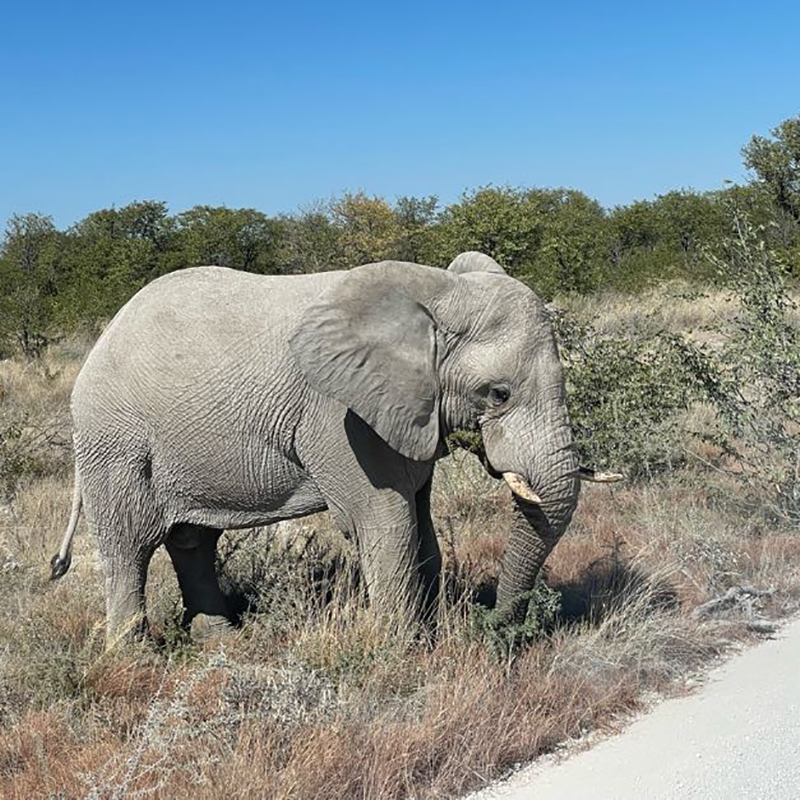
The biggest yield sign: An elephant about to cross the road in Namibia. -
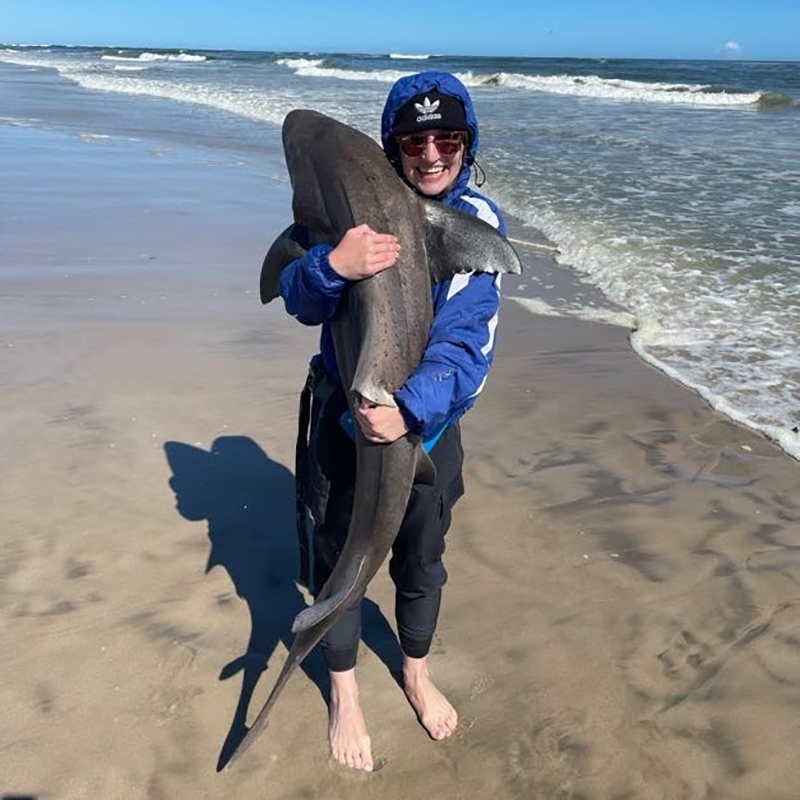
Jaylee Sheets snuggles a gully shark before releasing it in the Atlantic Ocean near Swakopmund, Namibia. -
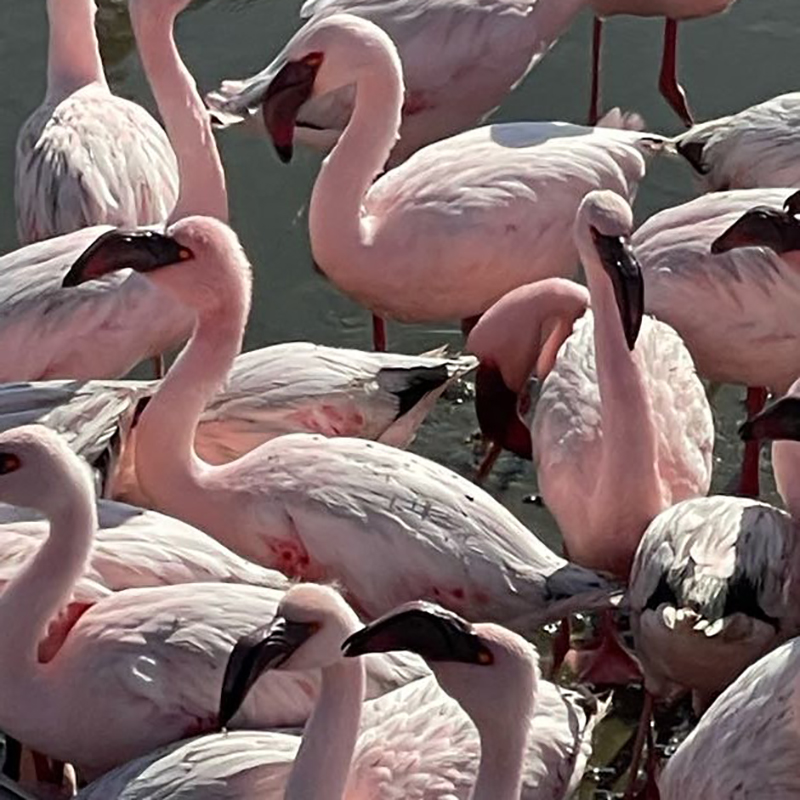
It’s always a party when the flamingos show up! The pink revelers flock at Walvis Bay during the 2024 Namibia study abroad. -

An Ovahimba woman demonstrates a traditional smoke bath during the 2024 School of Natural Resources study abroad in Namibia. -
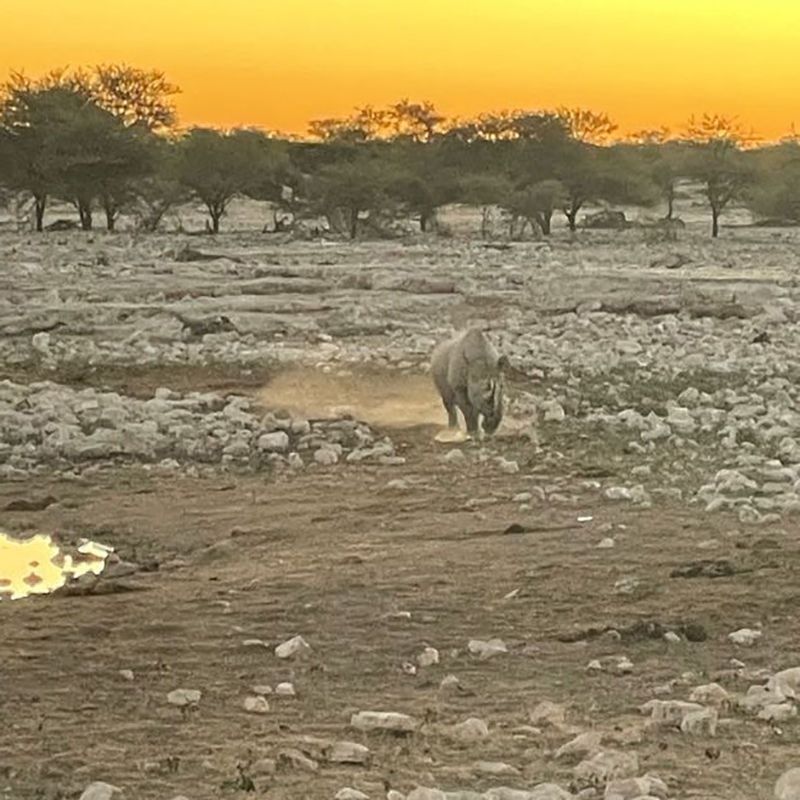
A rhino forges its own path at Etosha National Park. -
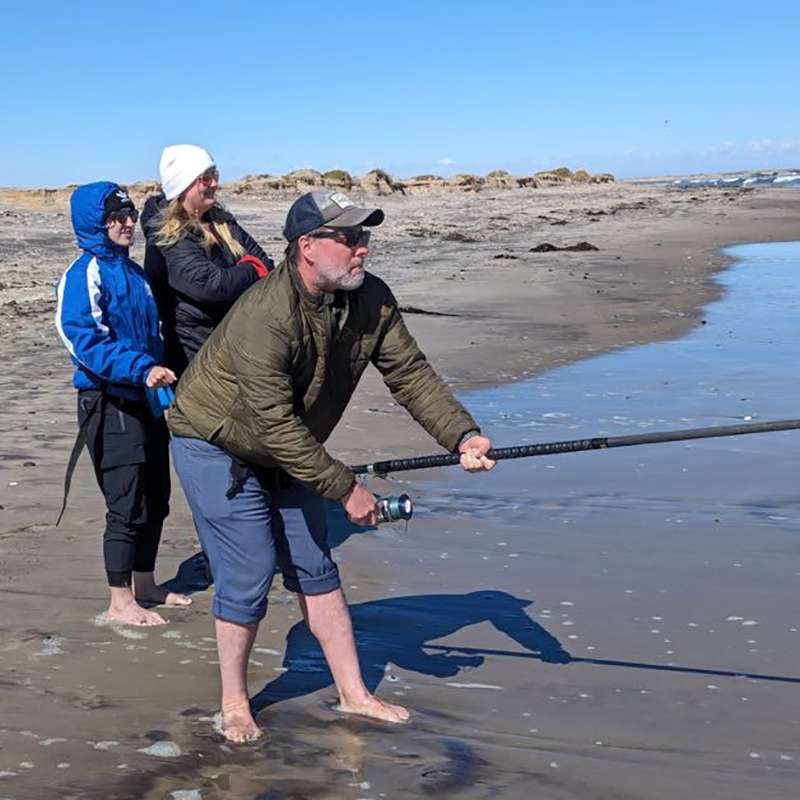
Christopher Chizinski, professor, reels in a shark from the Atlantic Ocean near Swakopmund in the 2024 Namibia study abroad. -
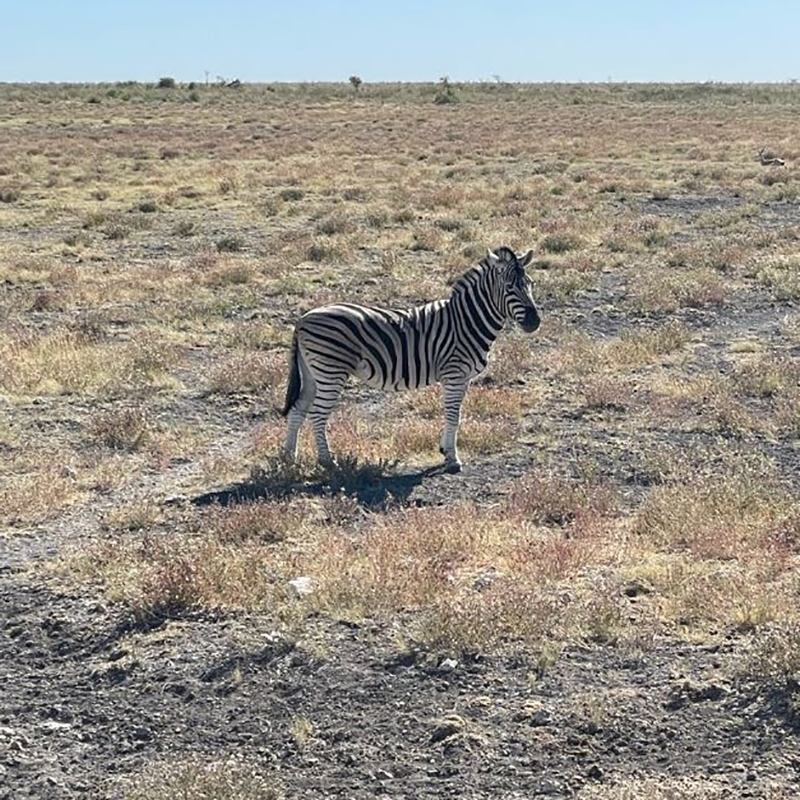
A zebra at Etosha National Park shows its best angle for onlookers in the 2024 study abroad.