Posted: 3/5/2026
SNR Alumni: Jacob Harvey at Barta Brothers Ranch Update
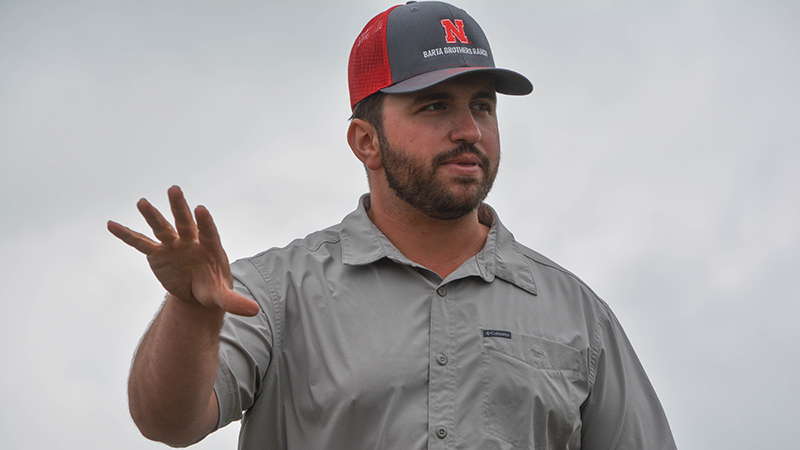
Jacob Harvey began managing Barta Brothers Ranch in January 2023 with the hope that the "little brother" to other University of Nebraska–Lincoln ranches and farms could compete better with them.
"I was wanting us to just be firing on all cylinders, or punching above our weight class, so to speak, when it comes to producing research out here,” he said.
He got it.
Although the ranch was still recovering from the COVID-19 pandemic when he started and had only one large project and about 10 overnight visitors in the May-August field season, now the ranch serves as the research site for three large projects, many smaller surveys and more than 50 overnight guests each field season.
Barta Brothers Ranch has retained the large collaborative adaptive management project begun in 2020 by Craig Allen and Walter Schacht, emeriti professors from the School of Natural Resources and the Department of Agronomy and Horticulture. Eight Nebraska researchers, including Dan Uden and Gwendŵr Meredith from the School of Natural Resources and the Center for Resilience in Agricultural Working Landscapes, now lead that project looking at patch-burn grazing compared with other cattle grazing systems.
The ranch also has a NASA-funded project with Ran Wang, environmental spatial scientist; Nic McMillan, range scientist; and other researchers from Nebraska and Oklahoma State. The scientists are tracking cattle and their grazing habits by placing GPS collars in each of the herds on the ranch's 5,000 acres of rangeland.
Sarah Sonsthagen and other scientists from the Nebraska Cooperative Fish and Wildlife Research Unit have been working with scientists from Kansas State University's co-op unit to research greater prairie-chicken survival and habitat usage in the Sandhills.
Other researchers have been working at the ranch with the Nebraska Game and Parks Commission to survey American burying beetles in the Sandhills. And researchers have been carrying out numerous side projects about soil, dung beetles, birds or other small animals.
Added to that, Harvey has begun work with Jerry Volesky, a Nebraska professor in range and forage sciences, to publish findings of grazing research at the ranch from 2010 to 2018.
He keeps the ranch running smoothly to aid all of this research. Year-round, he works with project leads and the local lessee to write grazing plans to fit research and management needs. From fall to spring, Harvey repairs equipment, gets vehicles serviced, deep cleans buildings and prepares for the arrival of the next group of research technicians and students. From May to September, he spends much of his time working with and mentoring students on research projects.
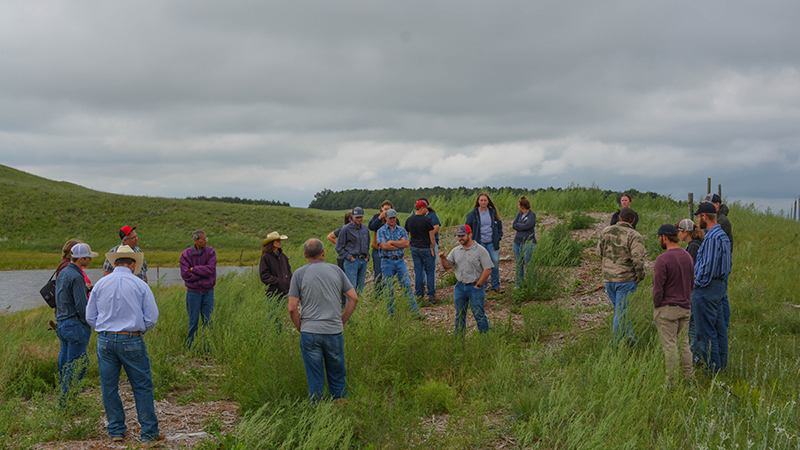
This mentoring work is what he said he enjoys most about his job. It may involve tasks as different as showing students how to run code in R, back a trailer, open a gate or identify plants.
"We have a shifting demographic of students from rural to more urban population centers," Harvey said. "That's where our grad students are coming from a lot of times. They didn't grow up driving four-wheelers or doing such-and-such, and that's OK. Anybody can learn anything."
He tries to help them become comfortable and confident on the ranch without ridicule.
"Worrying that I'm going to yell at them if they mess up or do something wrong is the last thing they need to be worrying about," he said. "They are out there to do research, and my position is there to make sure that data collection goes off as smoothly as it can."
Doug Zalesky, his supervisor at the Eastern Nebraska Research, Extension and Education Center, said the center is fortunate to have Harvey leading the way at Barta Brothers Ranch.
"He hit the ground running in 2023 and has never looked back, as evidenced by the significant increase in research being conducted there and the impact it is having for our stakeholders," Zalesky said.
Harvey, a former "townie" from Holdrege, Nebraska, didn't grow up on a farm or ranch but said he loves the work he does at the ranch and feels at home in the grasslands of the Great Plains. He identified his next career step as earning a doctoral degree from Nebraska in agronomy with an emphasis in range sciences.
"I want to be able to lead some of these projects myself," he said. "I would like to put in for grants and do some of these things on my own."
He is working with Uden and Mitch Stephenson, agronomy and horticulture professors, on doctoral research largely about the resiliency of the Sandhills and managing invasive species.
Meanwhile, back at the ranch, he has plenty of work to do and continues to further others' research while embarking on his own.
"I like the momentum we've got, and there's a lot of things I would like to see through before thinking about moving on," he said. "I would like to leave it in a much better place than I found it, and we're getting there. I'm just not satisfied with where we're at yet to think about wanting to go anywhere else."