Posted: 3/27/2026
Restoring Nebraska’s Ponds: New Extension Guide Offers Practical Solutions
Restoring Nebraska’s Ponds: New Extension Guide Offers Practical Solutions
Ponds are a familiar and valued part of Nebraska’s landscapes—providing wildlife habitat, recreation, and aesthetic value across rural and urban communities. But many of these waters are increasingly affected by nutrient pollution, leading to excessive algae, weed growth, and declining water quality. A new Extension circular from the University of Nebraska–Lincoln, led by School of Natural Resources faculty member Steve Comfort and collaborators, offers a clear and practical roadmap for addressing this challenge.
The publication, Restoring Water Quality in Eutrophic Ponds, explains how nutrients like nitrogen and phosphorus accumulate in ponds through runoff and internal cycling, often creating persistent water quality problems. Even when external inputs are reduced, nutrients stored in pond sediments can continue fueling algae blooms year after year. The guide emphasizes that effective solutions require both prevention—reducing nutrient runoff from surrounding landscapes—and treatment approaches that actively remove or limit nutrients already in the system.
“I think our extension circular is unique because it provides ideas and steps pond owners can take to restore water quality in their ponds – it covers both prevention and treatment,” said Steve Comfort, SNR faculty member and co-author. His team’s work reflects years of research in Nebraska ponds, including approaches that combine biological and chemical strategies to address nutrient-driven water quality issues.
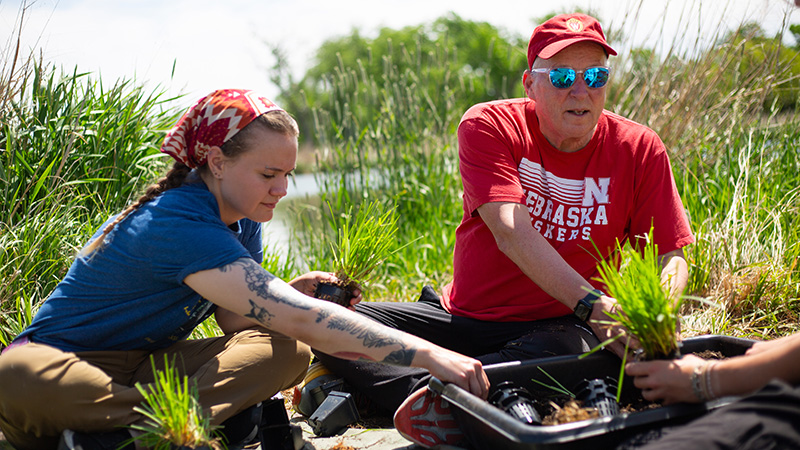
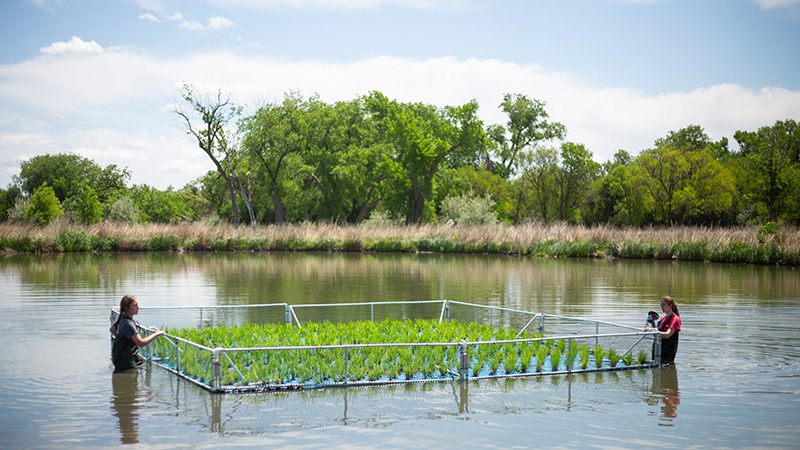
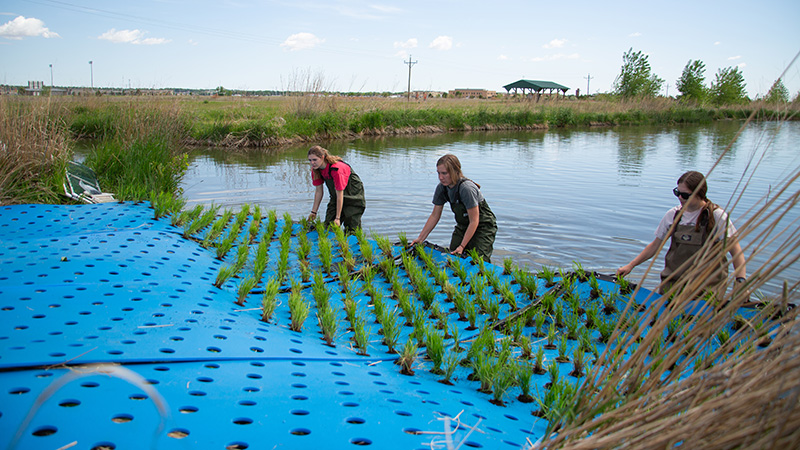
Those strategies include floating treatment wetlands that remove nitrogen through plant uptake and microbial processes, along with methods to bind phosphorus and make it unavailable for algae growth. Together, these approaches move beyond short-term fixes and toward long-term restoration. “We hope this work will help individuals or communities across Nebraska address the visible symptoms of ponds with high nutrient concentrations at their source by providing data-driven, environmentally-friendly, cost-effective treatment methods,” said Anni Poetzl, SNR Extension Educator and co-author.
The full Extension circular is available here: https://extensionpubs.unl.edu/publication/ec3082/restoring-water-quality-in-eutrophic-ponds